
One day in the spring of 2001, while I was in my office in the English Department at the University of Wisconsin-Madison, a fax arrived from a stranger. It was a single piece of paper with a newspaper article photocopied in the center and, along one margin, a handwritten note. The sender stated only that they lived in Las Cruces, New Mexico, and thought I would want to know the information contained in the fax.
The article was about the arrest of two men for drug trafficking and illegal use of firearms, and it included their names, alleged crimes, and the complaints from neighbors that led to their arrests. The detail that caught my attention, as the sender knew it would, was the men’s address: the small, three bedroom house in Las Cruces that my wife and I then owned. Unable to sell the house in 1998 when we moved from New Mexico to Wisconsin, we had been renting it out for almost three years.
After staring at the piece of paper for some time, I gathered myself together and took the obvious next step. I called our property manager in New Mexico. She said she didn’t know about the arrest but admitted that there had been complaints about the tenants. I was upset. I couldn’t believe we were linked to the story, that we might even be responsible for it somehow.
When I hung up, a slew of questions occurred to me: Why were people like that living in our house? what must our former neighbors think of us? more urgently: how would we get the men out of the house? and then what would we do?
The fax could not have come at a worse time. Just months earlier, after fifteen years of marriage, my wife and I had separated. I moved out of the Madison apartment we shared with our two daughters and into another, smaller apartment nearby. I was devastated. I felt bad for her, so far from her family; I felt awful for our two daughters, so young; I felt embarrassed in the face of family, friends, and colleagues. I was now living alone, in an empty apartment: my personal life a shambles.
My career was in equally bad shape. Several years into a tenure-track professorship at a major research university, I had made no attempt to publish my dissertation as a book. In fact, I had started an ambitious new project, from which I had so far published nothing, a project unwieldy and incomprehensible. My teaching was similarly stuck. And, as the sole junior faculty member in a marginal area of a large, intimidating department, I felt insignificant. I wasn’t sure I was even in the right profession anymore.
On top of all that, I was deeply in debt. After years of graduate school, my wife and I had accumulated huge amounts of student loan and credit card debt, all of it in my name. And now I was paying three housing bills on an assistant professor’s salary: my new single apartment, my wife’s bigger apartment with the girls, and the mortgage for the house in New Mexico. Once the renters were evicted, that house would generate no income until we either sold it or found new tenants, neither option quick or easy.
Truth be told, my wife and I had no business being landlords. We had only ever owned one house our entire lives, that little place in Las Cruces; and the down payment for it had come entirely from her parents. We bought the place in the summer of 1996 when we were in our mid-30s; our girls, 7 and 1. I had just finished a PhD in Rhetoric – after 24 years of school stretched over 35 years of life – and accepted my first faculty position in the English Department at New Mexico State University, with a teaching load of five courses per year, high expectations for research and service, and a salary of $34,000. My wife had just finished a long delayed bachelor’s degree and would, in the fall, begin a master’s program at NMSU. We thought our lives were finally about to begin after years of cramped apartments, empty bank accounts, and part-time teaching jobs.
I am sure we overpaid for the house: it was new, in one of those cheap-looking subdivisions carved out of the sunbelt, with thin stucco walls and a small back yard – three bedrooms, a living room, kitchen, dining room, and brick patio. But we thought it was palatial, with appliances we’d never had before and stunning views of the desert. There were other attractions in our new life – the endless blue sky, the dry air, the craggy mountains nearby, laced with hiking trails, Albuquerque and Santa Fe a few hours north, and new friends for us, mine in one department, hers in another.

In just two years, though, when she finished her master’s degree, we faced yet another crossroads. She had caught the academic bug and wanted to pursue her studies further, an impossibility at NMSU. Meanwhile, I was publishing and teaching with energy and enthusiasm. I liked my job and colleagues, but I knew I could make more money elsewhere – where my wife might also pursue a PhD. So, I did a modest job search and found a faculty position at the University of Wisconsin-Madison, with a lighter teaching load, a higher salary, and a PhD program for her.
There was another reason to move. By 1998, our marriage was falling apart, and we thought another change in scenery might help.
Everyone says you should own a house for at least five years before you try to re-sell it. Everyone is right. We couldn’t very well ask more than what we paid just two years earlier, yet we couldn’t find a buyer at the break-even point. The area was by then overbuilt. So, we hired a property manager to lease the place. And, in the summer of 1998, we packed up everything we owned and left town.
For the first year or so, everything was fine. Madison turned out to be congenial. We moved into University Houses near the UW-Madison campus, where our daughters were surrounded by the children of other faculty members and graduate students. They loved the neighborhood and their schools. Our commute to campus, along the shores of Lake Mendota, was short and scenic. My wife and I buried ourselves in our careers. As for the house in Las Cruces, it was rented to a small, quiet family who took good care of the place. The rent they paid covered, just barely, the cost of the mortgage plus the fees of the property manager. I gradually put the house out of my mind except for the day once a month when I would get an account statement in the mail.

Unfortunately, those tenants left after a year and others moved in, in a process I was largely uninvolved with – except for a slight worry in the back of my mind that each new set of tenants seemed, on paper, a little less desirable than the ones before. Still, I didn’t realize there was a problem until the fax arrived in spring, 2001.
It was clear that I would have to go down to Las Cruces and take charge of the situation. The property manager had handled the eviction. But the place still needed to be cleaned up, since we had decided to try selling it again. I would fly down as soon as the semester ended; my wife would stay in Madison with our children. Once in Las Cruces, I could clean up the house and yard, make whatever repairs were needed, and arrange for a realtor. I would have to do it all quickly because we couldn’t afford to keep paying a mortgage on top of our other bills.
I was daunted by it all. There would be the expenses of the trip: flying to New Mexico, renting a car, staying in a hotel, buying meals, paying for repairs and yardwork – none of it affordable at the time. And then, the uncertainty of it all: what would I find at the house? How much of the work could I do on my own? What other obstacles would emerge that I hadn’t considered? It felt like I had fallen into a hole, and every time I found a perch, I only fell further down.
And then, unexpectedly, a hand reached out.
My father was retired and living with my mother in Raleigh, NC, where they had resided most of their adult lives. When I told him I was going to New Mexico to clean up the house and put it on the market, he said, unbidden, “I’ll go with you. We’ll do it together.”
So, in early June, 2001, I flew down to Las Cruces on a Thursday afternoon and met my father at the airport there. We stayed until the following Monday. I rented a car and reserved a room in a hotel. We saw old colleagues for some meals, but mostly we ate in restaurants and were in bed early every night.
During the day, we worked on the house. It was a mess. Against the terms of the lease, the tenants had kept dogs inside and out; there was shit everywhere. There was also a stash of pornography – videotapes and magazines – which I was embarrassed for my father to see. And there were holes in the wall where the tenants had extended tv cables throughout the house. The carpet was stained; the yards – front and back – untended. The front lawn, in fact, had reverted to sand.

When we weren’t working on the house and yard, I was on the phone, dealing with the utility companies, looking for a landscaper, trying to find a realtor. I was sullen and ashamed. I was quickly realizing that we would never recoup our investment in the house, knew that even after all this work and worry, I would be right back where I had started: alone, broke, and stuck. And yet I had no choice but to trudge on, cleaning up dog shit in a house recently occupied by drug dealers, a house that, it turned out, had been little more than a pit stop in a journey that now seemed, in the presence of my father, random and meaningless. I was in a dark mood that first day.
He was, as ever, cheerful: running errands, helping with the cleaning, listening as I complained. He paid all our expenses – hotel, restaurants, rental car. And it wasn’t just that he was dealing with it better than I was; he seemed actually to be enjoying himself. A North Carolinian his whole life, he was fascinated by the endless sky and jagged mountains. With people we met, he was charming and inquisitive. For him, New Mexico was an interesting turn my life had taken, and he was happy to revisit it.

But as the weekend progressed, my mood soured further. The fact that my father was enjoying himself only made the situation worse. As we ran errands or worked in the yard, I watched him warily out of the corner of my eye. It was hard not to compare myself – where I was in my life – with him, not only as he was then, retired and worry-free, but long before, when he was my age, with the same or even more pressures on him. The comparisons were not favorable to me.
In the summer of 2001, my father was 70 years old, and I was 40. We were exactly a generation apart. Was that why we approached that weekend so differently? He was, after all, born in a small town in eastern North Carolina in the midst of the Great Depression, had seen in his youth a world on the brink and, as an adult, helped build, with little more than earnest faith and hard work, a new world of staggering prosperity. Now he was watching life go by from the passenger’s window.
Me? I was born at the end of the Baby Boom, with every priviledge. I had spent much of my youth reading, daydreaming, thinking – always imagining other worlds. Now I was trying – with little success – to build a life in this one: start a career, raise a family, make a place for myself, pretending that I was following a well-worn path when I was actually stumbling in the dark.
But it wasn’t just a generational difference. My siblings had not ended up as I had; nor were all those in my father’s generation like him. There was something else that distinguished us besides our respective ages and upbringing, and it never hit me as forcefully as it did that weekend in New Mexico. The ways we had lived our lives, the choices we had made, our very personalities: we were just so different.
Above all, I now saw, my father was deeply, inextricably, rooted in his world, a part of it in every way imaginable, continuous with and indissoluble from his time and place, his circumstances, the culture and community around him. Every aspect of his life seemed, to me, congruent with every other: his work, his family, his faith, his friends, his character – it all fit together, seamlessly, into an indivisible whole.
He was rooted in a more concrete sense, too, and the trip to that far corner of the world only highlighted it. He had lived his whole life in North Carolina, had been married to my mother for 50 years, the two of them devoted to the same church in downtown Raleigh where they had met as college students. He had built a medical practice from scratch and watched it grow across 40 years as the city itself grew around him, all of it – the church, the city, his career, his marriage – one long, unbroken trajectory up.
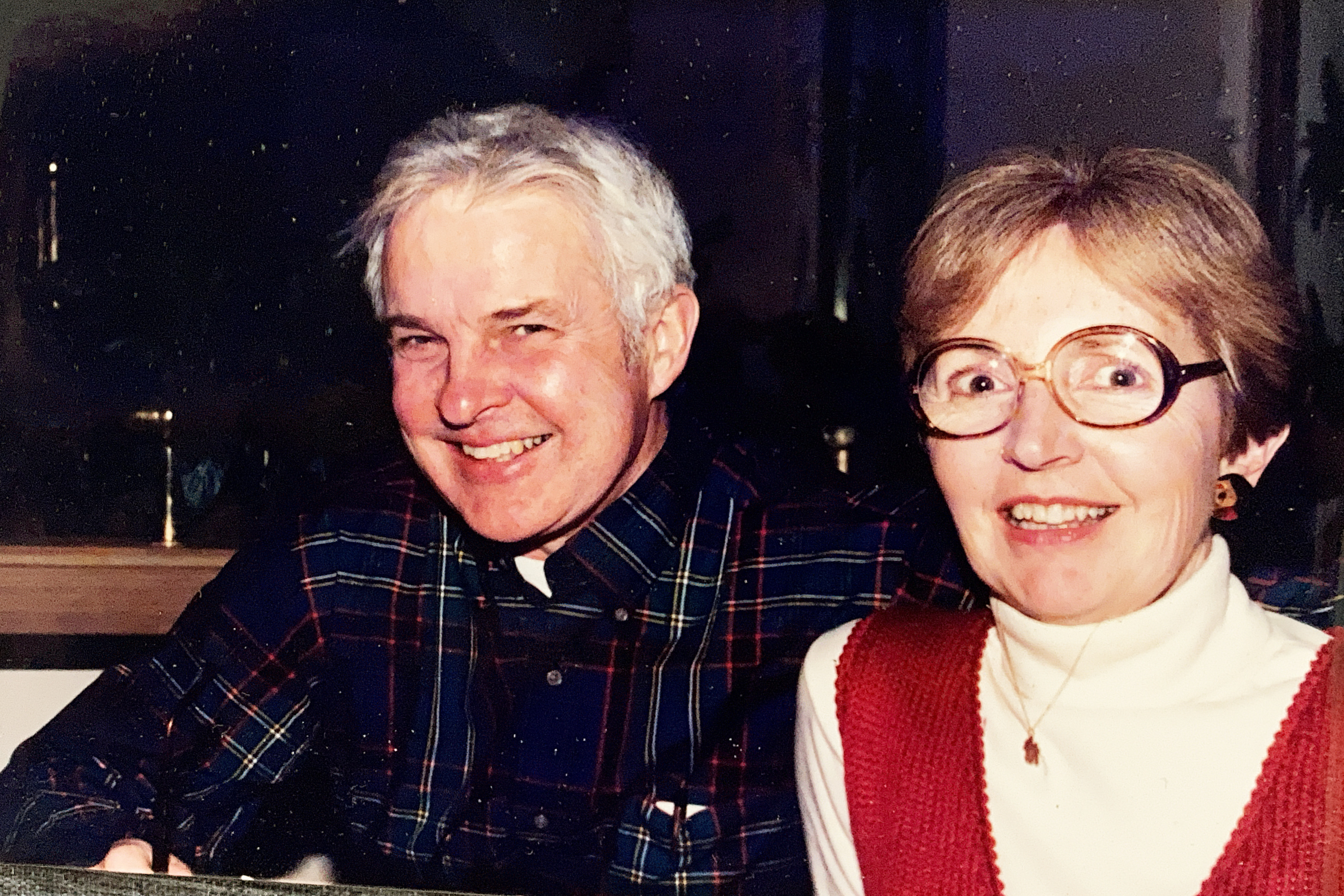
Yet he lived modestly, with my mother, in the same part of town they’d always lived in. He took care of his small yard, walked in the evenings in their quiet neighborhood, greeted everyone cheerfully, followed closely his college sports teams, was relied on by his patients, colleagues, family, and friends alike. He was unfailingly kind and good, and he had always been that way. A newspaper article that my grandmother saved, about his boyhood fame as an athlete, showed him to be exactly the same person at 17 that he was at 70, “known for his modesty and friendliness.”
That’s not to say his life had been easy. At 18, he had left the small-town, eastern North Carolina of his childhood for the capital city, enrolled in the state’s land-grant college to study science, for which he had no particular aptitude or background, and began attending a downtown Baptist church of his own choosing. He gradually charted his own path in life, distinct from that of his parents and siblings. There were bumps along the way: his high school football glories did not translate to college. The classes at NC State were difficult, his professors discouraging. At the end, he didn’t get into veterinary school, which had been his goal, and, since he was on an ROTC scholarship, he had to report to the Army instead.
Two years later, now determined to be a medical doctor, and with a wife and baby in tow, he returned to North Carolina for an additional year of college, hoping to improve his chances for graduate school. But he was rejected again. He was thinking of applying to the local Baptist seminary when he heard from one of the medical schools: a spot had opened up, would he take it? It was, he later said, the happiest day of his life.
In medical school, my father struggled, but with his faith deeper than ever and my mother firmly at his side, he eventually got his MD and, after an internship in South Carolina, a false start as a general practitioner in rural Tennessee, a pediatrics residency in Virginia, he returned in 1964 to Raleigh, now a wife and four children in tow. Within two years, he had started his own pediatrics practice. Caring for babies, and their worried mothers, turned out to suit him. At 35, he had found his calling.
Even then, he worked tirelessly. He agonized about his patients and empathized with their parents. My siblings and I grew up hearing stories about his slow, gentle way with children and adults alike. After he died, a former patient told us a story about him seeing their sick baby one day at his office. Still thinking about the child when he got home, troubled about something he couldn’t identify, he called the parents and asked them to bring the child in again that night, a move that saved the baby’s life. There were dozens of stories like that over a forty-year career.
My father admitted to me once how much he worried about making mistakes; I think that was one source of the modesty that so many saw in him: he knew his limitations. I think it was also the source of his endless studying, his constant effort at self-improvement, long after he was a licensed physician.
He worked at his faith, too. I never knew an adult who took Sunday School lessons as seriously as my father, doing his homework every Saturday night, reading the Bible and taking notes in the same inscrutable handwriting he used for prescriptions. He and my mother stayed devoted to their downtown Raleigh church and its social mission when others in their circle turned outward, to the country clubs and shopping malls of that ever-expanding city.
His religious faith and medical practice were closely related. It was only after he died and I began going through his papers that I realized how hard he worked, how intensely he prayed and sought guidance. I think he saw his medical practice as a kind of ministry, based as much in love as expertise; his close reading of Sunday School lessons must have been, in part, about trying to understand the world’s suffering and how he could help alleviate it. Such work required constant study and effort, ceaselessly taking one’s responsibilities to heart.
In some of this, there was affinity between us. My father and I were both readers, interested in ideas. We were both self-doubting, more insecure than we let on. We were both by nature thoughtful, though, truth be told, we exemplified different signifcations of that word: I was always lost in thought, a kind of intransitive relation; he was always thinking about something, and not just things but other people. He combined thoughtfulness with a generosity of spirit, an open-heartedness, that I lacked.
In fact, at 40, I was in every respect his opposite: rootless, faithless, disconnected. I felt like I had been searching my whole life for something I could not find, could not even name. At the age when things for my father began to come together – his work, his family, his faith – my life seemed to be falling apart: my marriage fraying, my career on the verge, my bank account in dire straits. Worst of all, driving around Las Cruces that weekend, watching him load trash bags with the mess my life had become, I felt that, compared to him, I had no character.
And yet I don’t remember once, then or ever, feeling judged by him. He always seemed proud of me, interested in what I was doing, ready and generous in support. Truth be told, the trip to New Mexico was not the first time he had traveled a great distance on very short notice to help me. In 1984, he flew to Kenya when I was a teacher there and came down with a chronic case of malaria; in 1986, he flew to Washington, DC, when I got married and gave my parents exactly one day’s notice of the civil ceremony; and now, in 2001, my career and marriage in tatters, he was ready to drop everything to help me clean up a house that was literally bankrupting me.
Maybe that was how to think about our two lives: not to measure mine against his but to see the two as intertwined, to realize that no matter how badly I lived my life, my father was always willing to be a part of it, and thus to redeem it by his connection to it. How awful could a life be with such love in it?
By late Saturday we had done most of what we needed to do. We had cleaned the house and yard, hauled the trash away, done what repairs we could. We hired a landscaper to fix the irrigation system, painters to touch up the walls. I contracted with a realtor and started the paperwork for putting the house on the market. That night, we went to bed early.
The next day, Sunday, after breakfast, we got in the car and headed out of town. I had proposed the trip the night before. We would drive west to Deming on I-10, turn north up US-180 to Silver City, and then take NM-15 all the way to the Gila National Forest. It would be a three hour drive.

At the end of the road was the Gila Cliff Dwellings National Monument – a stunning place I had visited once before. Like so much of New Mexico – Acoma, Taos, White Sands – it felt like a different world from any you’d ever known or imagined. I knew my father would appreciate it.
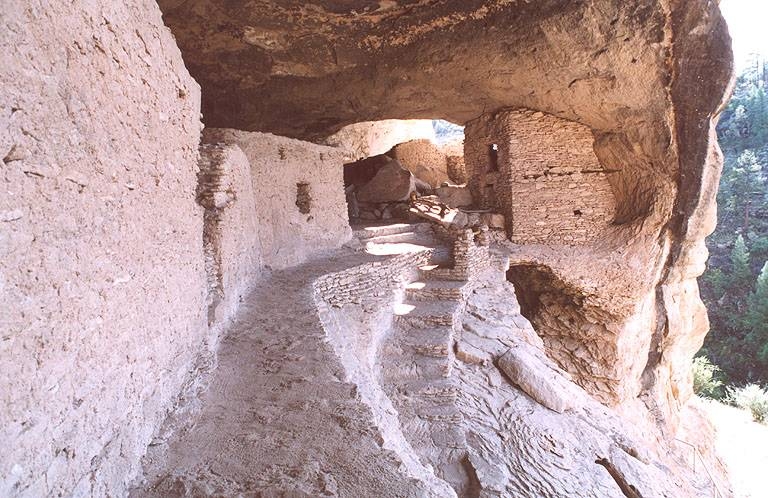
But it was the drive back that I thought he would enjoy most. Instead of returning on NM-15 to Silver City, we veered off on NM-35 to San Lorenzo and then down NM-61. I had found the route by accident on an earlier trip. It made the journey longer, but I wanted my father to see something.

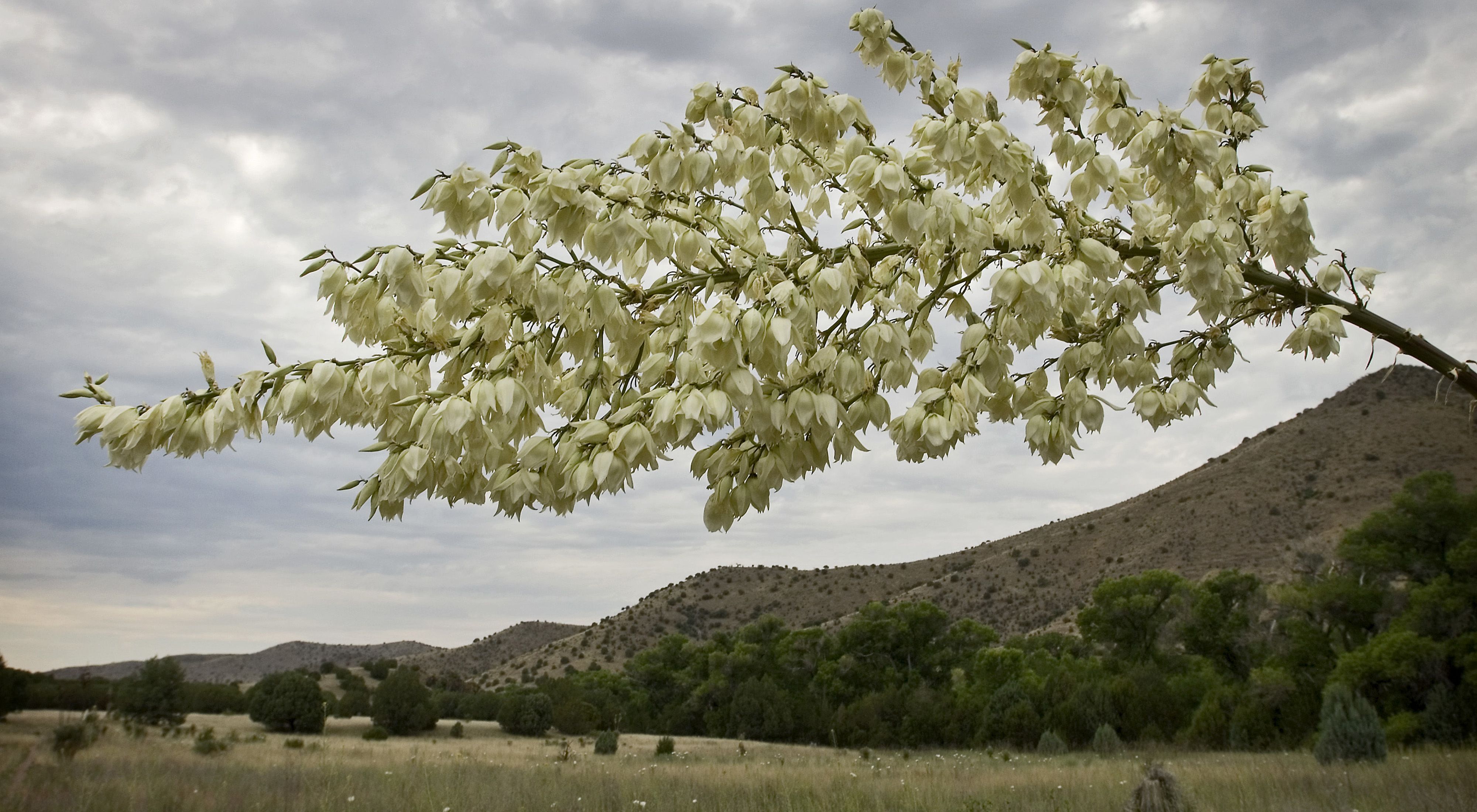
It was the Mimbres River valley, a landscape off the beaten path that had stuck with me. Not stunning like the Cliff Dwellings, or even the Organ Mountains outside Las Cruces, it was a sliver of rolling farmland – a narrow river lined on both sides with willow and cottonwood trees, their bright green contrasting softly, in the late afternoon light, with the brown and reds of the New Mexico highlands.

The drive was, I realize now, a small gift for my father, an hour or two in the country – the cottonwoods passing by as we drove, the little river, the rolling farmland. We’d had a hard few days, dirty and tiresome. I had not been a good companion. But now, he could at least look out the window and enjoy the view. He deserved that much.
Eventually, we came to US-180 and rode into Deming and then east along I-10 to Las Cruces. The sun was setting in the rear view mirror when we drove back into town.
That night, we had our last meal, and the next day, we checked out of the hotel and headed to the airport, where I returned the rental car. My father flew back to NC, I to Wisconsin.
I don’t remember how long it took to sell the house, but it sold. I paid off the mortgage and gave the balance to my wife – the whole thing had been a loss, but whatever remained was hers. As for me, I was happily rid of that third housing bill. Unfortunately, I was still broke and behind as ever on my book project. The summer of 2001, I probably hit my lowest point.
On September 10, I began seeing a therapist at UW Hospital who prescribed a weekly meeting, along with an anti-depressant. I wasn’t sure it would help, the talk or the pills, but I agreed to try both. To be honest, I think what jolted me out of despair was the events of the next day, September 11, 2001. The news began in the morning and didn’t stop, as I recall, for years – it cured me, I think, of self-pity. The world was a big place; life was hard; you had to keep trying.
That’s not to say the following years were easy. The book was slow going – in fact, excrutiating. As a break, I started a whole other project, which came faster. And the confidence I accrued from that second project fed back into the first and helped me finish it, though it would be a decade before I felt I had made a career for myself, and even that good feeling wouldn’t last.
Meanwhile, I found a slightly better apartment, across the street from my wife; we shared the girls completely. Madison – and especially University Housing – turned out to be a good home for us; we stayed eight years in the complex, long after we were supposed to move on. I rode my bike back and forth along the lake, met students and colleagues at the Union, played tennis and basketball with the girls. They were an endless source of pleasure and pride. There was heartbreak to come, more changes, happiness and sadness both. But I never again called my father in dire need, and he never again dropped what he was doing to fly across the world to help me.
People say life is short. I’ve found it, rather, to be long. In its twists and turns, old passages recede, new ones emerge, others retain their hold on you long after they’ve gone by. Meanwhile, the future seems to stretch out endlessly into the distance, the story far from exhausted. That has been unexpected – that so late in one’s journey, there is still another bend ahead, the current carrying you inexorably on. There is satisfaction in the very length of the voyage, in change itself.
In my father’s notes, rescued after his death, it was surprising to see what a scholar he was, in his way, always reading, attending lectures, taking notes: trying to figure things out, wanting to remember what he had heard and read – wanting to understand it. There were no limits to what he was interested in; his curiosity was boundless. I had thought for so long that he was, above all else, rooted; it turned out, in his reading, his lecture-attending, his note-taking, to say nothing of his literal travels, he had circumnavigated the world again and again.
As for me, I began to see the opposite. In reflecting on how rootless my life had seemed, I came to realize how enmeshed I had always been in the world of my parents – of North Carolina, Raleigh, First Baptist Church, ACC basketball, the dogwoods and rhododendrons. Was it their rootedness, their faithfulness, their utter dependability, that allowed me, all those years, to be unmoored?
In memoriam:
Robert Henry Fleming (1931 – 2022)
Nancy Jo Wallis Fleming (1932 – 2023)
 City of Rhetoric
David, this is an engaging piece, so personal and touching. I’m so sorry for the loss of both your parents, just one year apart. Your father sounded much like mine, always curious, always learning, until the end. Thinking of you, sending love,
Emily (Burns) Smith
AMAZING AND BEAUTIFUL…SO TOUCHING …I NEEDED THIS TODAY…..THANK YOU FOR SHARING…LOVE YOU ________________________________
David,
I didn’t want it to end.
The authenticity of feelings we’ve all had was powerful.
Thank you for sharing.
What a beautiful tribute to your Mom & Dad.
Aren’t we all looking for ways to be more like them and at the same time our truest unique selves…..
I think aging has a way of bringing those two desires a little more to the center. 💗
Hope all is well.
Hi David,
Teresa passed this on to me and I’m so glad she did. You writing voice honest and compelling. Your story flows so easily. I savored every nuance, every detail.
Your vulnerability opened my own heart to feelings of gratitude for my own father who died fifty years ago.
I’m left wanting more.
Grateful to have read your story,
Rob Zucker
I can’t believe Bobby made it to your civil ceremony with only one days notice!!
What an enjoyable read. Impeccably written and will touch anyone who comes across it. Already looking forward to the next “New Post” email notification.
That was beautiful David. Thank you.